AREA(s) SERVED:
Region/Borough:
Peel
Town/Neighbourhood:
Mississauga
Postal Code(s):
L4T, L4W, L5W
Note: Our products and services are available in Mississauga and the Peel Region area, as well as nationwide.
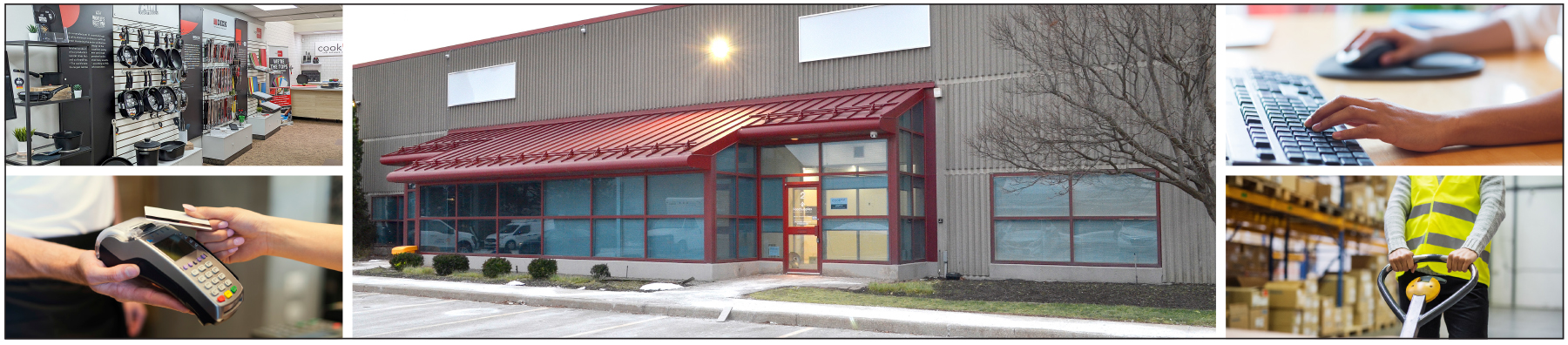
CookUp supplies professional knives, cookware, prep surfaces and insulated food transport to kitchens in Mississauga, Ontario. The range is drawn from European manufacturers including F. Dick, AMT Gastroguss, Profboard, ScanBox and Scraegg. CookUp operates from Etobicoke as part of Food Supplies Distributing Company Inc and ships across Canada.
Mississauga's dining concentrates in identifiable districts rather than one strip. Port Credit runs along the waterfront, where seafood and special-occasion service dominate at rooms such as Snug Harbour and Alioli Ristorante. Streetsville keeps a village high street on Queen Street, with cafes, family restaurants and upscale dining including Cagney's Steakhouse.
Those two profiles buy differently. Waterfront seafood service needs blades that break down fish without wasting yield. Steakhouse and special-occasion work needs carving and portioning tools, and surfaces that handle resting meat.
A flexible filleting knife follows the bone rather than cutting through it, which is what protects yield on every fish. F. Dick forged knives are shaped from a single heated steel bar, producing the balance that keeps a long blade controllable. Boning knives handle joints and heavier separation work. Compare knife types.
AMT Gastroguss produces cast aluminium cookware with a thick base. Even heat is what gives a consistent sear across a pan rather than a good result in the centre only. Thin pressed pans warp and develop hot spots under repeated high heat. Induction-compatible versions are produced separately, so the range should be matched to the stove. View the cookware range.
A carving board has a juice groove to catch liquid from resting and slicing cooked meat, which a chopping board does not. Profboard also uses a base board with a replaceable top sheet, colour coded by food group, so raw fish, raw meat, poultry, vegetables and ready-to-eat items stay on separate surfaces. See how the sheet system works.
ScanBox builds insulated carriers and transport systems in Sweden for the stage between kitchen and table. Catering, banquet service and off-site events all require food to hold a safe temperature while it travels. Carrier choice depends on load volume, the number of stops and whether the unit is opened repeatedly in transit. View carriers and transport carts.
CookUp does not restrict professional lines to trade buyers. Home cooks in Mississauga can buy the same forged knives, cast cookware and prep systems specified by commercial kitchens. Culinary students building a first roll benefit from the same durability, since a forged blade outlasts a training programme by decades. Explore the culinary kits.
The difference between a filleting knife and a boning knife decides how much yield a kitchen keeps on every fish, and it is easy to buy the wrong one. The CookUp team advises on product selection, correct use and maintenance, and that advice is available before a purchase rather than only after one. Contact the team with the work the tool has to do.
CookUp also publishes a reference library rather than keeping that knowledge internal. Blade types sets out what each geometry is built for, knife care and maintenance covers washing, honing and storage, and cookware care and maintenance covers heat, cleaning and coating life. A separate set of guides explains sharpening, including what a sharpening steel is and how a steel differs from a stone.
For product launches, technique and kitchen content, CookUp posts on Instagram and Facebook.
Orders can be placed online at any time. Restaurants, caterers, butchers and resellers ordering regularly can arrange a trade or dealer account rather than buying at retail prices. Specifying the right blade, pan or board depends on the work it will do, so buyers unsure of the fit should ask before ordering. Contact the CookUp team.
Q: What makes a filleting knife different from a boning knife?
A: Flexibility. A filleting blade bends to follow the contour of a fish frame, while a boning knife is stiffer for working around joints and dense connective tissue. Using a boning knife on fish costs yield on every fillet because it cannot track the bone.
Q: Why does a carving board have a groove?
A: To catch the liquid released when cooked meat is rested and sliced. Without it the juice runs onto the bench, which is both a cleaning problem and a contamination path. The groove is the entire functional difference between a carving board and a chopping board.
Q: How thick should a steak pan be?
A: Thick enough that the surface temperature barely drops when cold protein hits it. A thin pan loses heat immediately and the meat steams rather than sears. This is why cast cookware outperforms pressed pans on searing regardless of the heat source.
Q: Should fish and meat share a prep surface if both are washed between uses?
A: No. Separation by dedicated surface is the control, because washing between tasks depends on it being done correctly every time under pressure. Colour coding makes the correct surface obvious and makes an error visible to anyone passing.
Q: What length of knife suits most restaurant prep?
A: Twenty to twenty-five centimetres covers the majority of chopping, slicing and dicing. Shorter blades force more strokes for the same volume and longer ones become unwieldy on a standard board. Specialist lengths are worth buying for specific tasks rather than as general tools.
Q: How do you keep a knife sharp through a long service?
A: Hone it at intervals rather than waiting for it to feel dull. An edge rolls over gradually, so performance declines before it becomes obvious. A few passes on a honing steel between tasks keeps the edge aligned and delays the need for sharpening.
Q: Does a heavier pan always cook better?
A: For searing and holding, generally yes, because mass holds heat. For anything requiring fast response to a heat change, such as delicate sauces, a lighter pan is easier to control. The choice follows the task rather than a general rule.
Q: What is the right way to clean cast cookware?
A: Let it drop in temperature first, then wash without abrasives. Thermal shock from cold water on a hot pan is the main cause of warping, and abrasive cleaning damages any surface treatment. Drying immediately afterwards prevents marking.
Q: How should insulated carriers be loaded for multiple stops?
A: Load hot, fill the space, and open as few times as possible. Air gaps accelerate heat loss and every opening resets the internal temperature. Sequencing the load so the first stop is nearest the door reduces how long the unit stays open.
Q: Is professional cookware worth it for a home kitchen?
A: Yes where durability matters more than initial price. A cast pan or forged knife bought once will outlast several consumer replacements. The adjustment is size, since commercial pieces are often larger than a domestic burner heats evenly.