AREA(s) SERVED:
Region/Borough:
Toronto
Town/Neighbourhood:
Scarborough
Postal Code(s):
M1L, M1R, M1B
Note: Our products and services are available in Scarborough and the Toronto area, as well as nationwide.
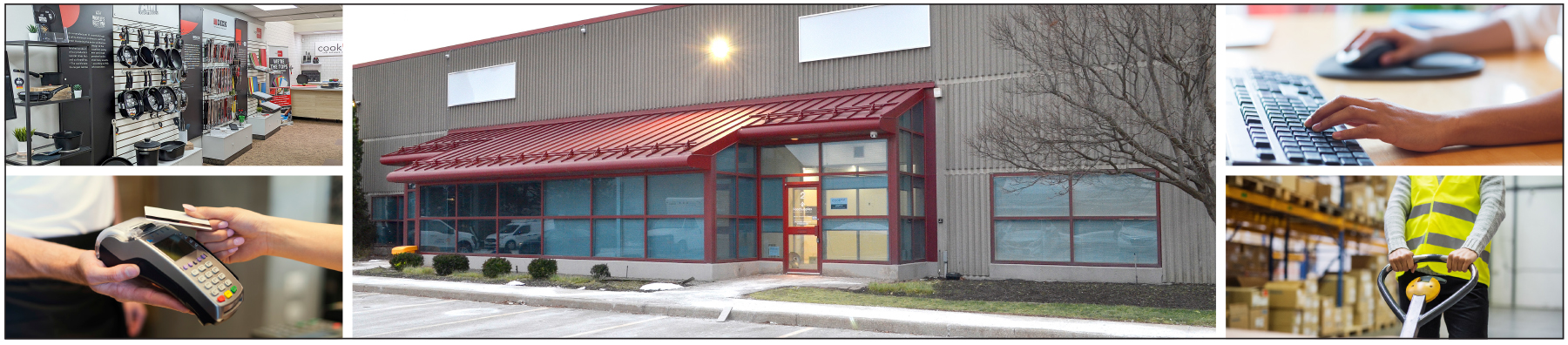
CookUp supplies professional knives, cookware, prep surfaces and insulated food transport to kitchens across Scarborough, Ontario. The range is drawn from European manufacturers including F. Dick, AMT Gastroguss, Profboard, ScanBox and Scraegg. CookUp operates from Etobicoke as part of Food Supplies Distributing Company Inc and ships across Canada.
Scarborough holds some of the most concentrated professional cooking in the country. The Agincourt area along Sheppard Avenue East is anchored by large Chinese malls including Pacific Mall, Market Village and Splendid China Tower, where dim sum rooms seat hundreds and barbecue counters hang roast duck in the window. Markham Road and Lawrence Avenue East serve the largest Sri Lankan Tamil community outside Sri Lanka. Malvern and West Hill carry a long-established Caribbean trade.
Each of those kitchens works differently. Cantonese barbecue sections poultry and pork all day. Hopper and kottu roti service runs continuously on a flat top. Roti and curry kitchens prep in bulk hours ahead. The equipment that suits one does not automatically suit another.
Kitchens breaking down whole poultry and pork need blades built for repeated impact rather than fine slicing. F. Dick forged knives are shaped from a single heated steel bar, which produces the weight and balance that sectioning work demands. Boning and filleting blades handle the separation before the heavier work begins. Compare knife types.
AMT Gastroguss produces cast aluminium cookware with a thick base. Continuous service and high-heat work punish thin pressed pans, which warp and develop hot spots. Even heat distribution improves searing consistency and reduces scorching. Induction-compatible versions are produced separately, so the range should be matched to the stove before ordering. View the cookware range.
Profboard uses a base board with a replaceable top sheet rather than a single solid surface. In a kitchen handling raw poultry, pork, fish and ready-to-eat items in the same space, colour-coded separation is the control that prevents cross-contamination. The sheet is the consumable, so a scored or contaminated surface is swapped without replacing the board. See how the sheet system works.
ScanBox builds insulated carriers and transport systems in Sweden for the stage between kitchen and table. Catering, event service and high-volume takeaway all require food to hold a safe temperature while it travels. Carrier choice depends on load volume, the number of stops and whether the unit is opened repeatedly in transit. View carriers and transport carts.
CookUp does not restrict professional lines to trade buyers. Home cooks in Scarborough can buy the same forged knives, cast cookware and prep systems specified by commercial kitchens. Culinary students building a first roll benefit from the same durability, since a forged blade outlasts a training programme by decades. Explore the culinary kits.
A cleaver for sectioning and a cleaver for slicing look almost identical and do entirely different jobs, which is the kind of distinction worth checking before ordering. The CookUp team advises on product selection, correct use and maintenance, and that advice is available before a purchase rather than only after one. Contact the team with the work the tool has to do.
CookUp also publishes a reference library rather than keeping that knowledge internal. Blade types sets out what each geometry is built for, knife care and maintenance covers washing, honing and storage, and cookware care and maintenance covers heat, cleaning and coating life. A separate set of guides explains sharpening, including what a sharpening steel is and how a steel differs from a stone.
For product launches, technique and kitchen content, CookUp posts on Instagram and Facebook.
Orders can be placed online at any time. Restaurants, caterers, butchers and resellers ordering regularly can arrange a trade or dealer account rather than buying at retail prices. Specifying the right blade, pan or board depends on the work it will do, so buyers unsure of the fit should ask before ordering. Contact the CookUp team.
Q: What is a cleaver actually designed to do?
A: A heavy cleaver is built to section through bone and joints using its own weight, not to slice. A lighter slicing cleaver is a different tool, shaped for vegetables and boneless protein despite the similar outline. Using a slicing cleaver on bone is the most common way kitchens chip an edge.
Q: How should a knife used on bone be maintained?
A: Hone it more often and sharpen it less aggressively than a slicing blade. Bone contact rolls and micro-chips an edge rather than simply dulling it, so realignment matters more than steel removal. A blade that has chipped visibly needs regrinding rather than routine sharpening.
Q: Why do commercial kitchens separate boards by colour rather than by washing between tasks?
A: Because washing between tasks depends on someone doing it correctly every time under service pressure. A colour system makes the correct surface obvious at a glance and makes an error visible to anyone walking past. It is a control that survives a busy shift.
Q: What causes a pan to lose its non-stick performance?
A: Overheating an empty pan and abrasive cleaning are the two main causes. Heat degrades the coating faster than use does, and metal tools or scouring remove it mechanically. Preheating with food or fat present, and cleaning with a soft implement, extends coating life considerably.
Q: How long can cooked food safely hold in an insulated carrier?
A: It depends on the unit, the load and the temperature the food entered at, so published figures are a guide rather than a guarantee. A carrier loaded hot and kept closed holds far longer than one opened at every stop. The reliable control is probing on arrival rather than trusting a rated hold time.
Q: Is a heavier board better than a lighter one?
A: Heavier boards move less during cutting, which matters for safety and accuracy. The trade-off is that they are harder to lift, wash and rotate, which discourages cleaning in a busy kitchen. A base-plus-sheet system separates the two needs, keeping a stable base while making the surface easy to change.
Q: What should a high-volume takeaway kitchen buy first?
A: Holding and transport equipment, because that is where quality is lost between the pass and the customer. A dish cooked correctly and then held badly arrives worse than a simpler dish held well. Knives and prep surfaces come next, since they affect every item on the menu.
Q: Do stainless and carbon steel knives need different care?
A: Yes. Carbon steel takes a keener edge and is easier to sharpen, but it will rust if left wet and it reacts with acidic food. Stainless resists both but generally needs more work to bring back to a fine edge. Most commercial kitchens choose stainless for that reason alone.
Q: How often should prep sheets be replaced?
A: When the surface is scored deeply enough that cleaning no longer reaches the bottom of the cuts. Knife marks hold residue regardless of how well the surface is washed, which is the food safety limit rather than an appearance one. Replacing a sheet costs a fraction of replacing a board.
Q: Can professional equipment be used on a domestic stove?
A: Yes, with two caveats. Commercial pot sizes are often larger than a domestic burner can heat evenly, and induction hobs require cookware built with a compatible base. Checking the base type and matching pan diameter to burner size solves both.