AREA(s) SERVED:
Region/Borough:
Toronto
Town/Neighbourhood:
Toronto
Postal Code(s):
M1R, M3C, M3H, M3M, M4B, M4C, M4E
Note: Our products and services are available in Toronto and the Greater Toronto Area, as well as nationwide.
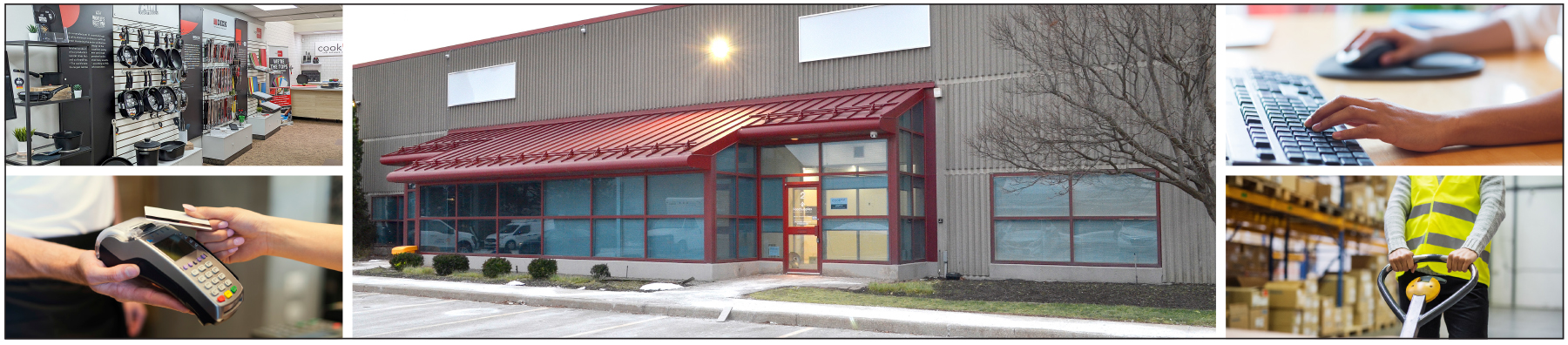
CookUp supplies professional knives, cookware, prep surfaces and insulated food transport to kitchens across Toronto. The range is drawn from European manufacturers including F. Dick, AMT Gastroguss, Profboard, ScanBox and Scraegg. CookUp operates from Etobicoke as part of Food Supplies Distributing Company Inc and ships across Canada.
Toronto's restaurant trade spans more than 200 cuisines, from Canada's only two-Michelin-starred kitchen to the counters of St Lawrence Market, which National Geographic has named the best food market in the world. The density concentrates along identifiable corridors: Queen Street West, King West, Ossington, the Danforth, Yonge and the Distillery District, with Kensington Market supplying a great deal of the city's independent cooking.
No single equipment specification covers that. What the range has to do is support very different techniques to the same standard, which is why the catalogue is organised by what a tool does rather than by cuisine.
F. Dick forged knives are shaped from a single heated steel bar, which produces weight, a bolster and stable balance. Blade geometry should follow the task rather than the menu: flexible filleting blades follow bone, boning knives separate joints, cleavers handle sectioning, and a serrated edge grips firm skins. Compare knife types.
AMT Gastroguss produces cast aluminium cookware with a thick base. Even heat distribution improves searing consistency and resists the warping and hot spots that thin pressed pans develop under repeated service. Induction-compatible versions are produced separately, so the range should be matched to the stove before ordering. View the cookware range.
Profboard uses a base board with a replaceable top sheet rather than a single solid surface. The sheet is the wear surface and the consumable, so a scored or contaminated surface is swapped without replacing the board. Sheets are colour coded by food group, keeping raw meat, poultry, fish, vegetables, dairy and allergen work on separate surfaces. See how the sheet system works.
ScanBox builds insulated carriers and transport systems in Sweden for the stage between kitchen and table. Catering, banquet service and off-site events all require food to hold a safe temperature while it travels. Carrier choice depends on load volume, the number of stops and whether the unit is opened repeatedly in transit. View carriers and transport carts.
CookUp does not restrict professional lines to trade buyers. Home cooks in Toronto can buy the same forged knives, cast cookware and prep systems specified by commercial kitchens. Culinary students building a first roll benefit from the same durability, since a forged blade outlasts a training programme by decades. Explore the culinary kits.
Across more than 200 cuisines the same question recurs: which tool is built for the job actually being done. The CookUp team advises on product selection, correct use and maintenance, and that advice is available before a purchase rather than only after one. Contact the team with the work the tool has to do.
CookUp also publishes a reference library rather than keeping that knowledge internal. Blade types sets out what each geometry is built for, knife care and maintenance covers washing, honing and storage, and cookware care and maintenance covers heat, cleaning and coating life. A separate set of guides explains sharpening, including what a sharpening steel is and how a steel differs from a stone.
For product launches, technique and kitchen content, CookUp posts on Instagram and Facebook.
Orders can be placed online at any time. Restaurants, caterers, butchers and resellers ordering regularly can arrange a trade or dealer account rather than buying at retail prices. Specifying the right blade, pan or board depends on the work it will do, so buyers unsure of the fit should ask before ordering. Contact the CookUp team.
Q: How should a kitchen choose knives when the menu changes often?
A: Buy the core blades to a high standard and add specialists only for repeated tasks. A chef's knife, boning knife and paring knife cover most work regardless of cuisine. Specialist shapes bought speculatively tend to sit unused.
Q: What equipment matters most for a kitchen doing off-site events?
A: Insulated transport, because that is where quality and safety are lost. A dish cooked well and held badly arrives worse than a simpler dish held correctly. Carrier choice follows load volume, number of stops and how often the unit is opened.
Q: How many colour-coded surfaces does a full-service kitchen need?
A: At least five, covering raw meat, poultry, fish, vegetables and ready-to-eat items. A sixth dedicated surface is normal where declared allergens are handled. Sharing surfaces between groups is the most common cross-contamination route.
Q: Does a professional kitchen need carbon steel knives?
A: Rarely. Carbon steel takes a keener edge and sharpens easily, but it rusts if left wet and reacts with acidic food. Most commercial kitchens choose stainless because it survives a busy wash-up, which matters more than the last degree of sharpness.
Q: How many knives does a professional kitchen actually need?
A: Fewer than most kitchens own. Three or four core blades cover the majority of work, and the rest are bought for tasks that recur often enough to justify them. A drawer of rarely used specialists usually signals speculative buying rather than a broad menu.
Q: How do you extend the life of professional cookware?
A: Avoid thermal shock and abrasive cleaning. Cold water on a hot pan is the main cause of warping, and abrasives remove any surface treatment. Letting a pan cool before washing removes most of the risk.
Q: What should a new restaurant buy before opening?
A: Knives and prep surfaces first, because they are used on every dish regardless of the menu. Cookware can be specified once the menu is settled. Specialist equipment is better deferred until the menu has stopped changing.
Q: Is induction compatibility something to check before ordering?
A: Yes, and it is easy to miss. Aluminium is not magnetic on its own, so a pan needs a specifically built induction base. Standard and induction versions of the same pan often look almost identical.
Q: How should knives be handled in a shared or rented kitchen?
A: Store them in guards or a roll rather than loose, and keep them with their owner. Loose storage damages edges and creates an injury risk. It also makes it impossible to confirm a blade has been cleaned between users.
Q: Can serious home cooks buy the same equipment as restaurants?
A: Yes, the catalogue is not restricted to trade buyers. The durability argument is arguably stronger at home, since a forged knife or cast pan bought once outlasts several consumer replacements. The main adjustment is scale, as commercial sizes are often larger than a domestic kitchen needs.